










Milwaukee
Read Full Article Click link Below
This article was written by Purnima Nath and reflects her views on Juneteenth, slavery, labor, immigration, and belonging in America
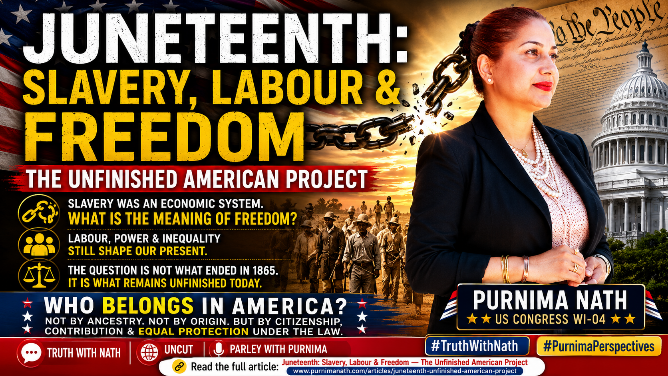
- Juneteenth as more than a historical commemoration: The article argues that Juneteenth should be viewed not only as the end of slavery but also as a reminder of ongoing debates about freedom, equality, and belonging.
- Slavery as an economic system: The author emphasizes that slavery was legally protected and deeply embedded in the American economy, not merely a moral failing.
- Labor and economic anxiety: The piece draws parallels between historical concerns about immigrant labor and contemporary debates surrounding immigration, globalization, outsourcing, and skilled-worker visa programs such as H-1B.
- Indian Americans and public discourse: The article contends that Indian Americans are increasingly affected by narratives about job competition and immigration, and argues that policy discussions should not devolve into broad stereotypes about entire communities.
- Citizenship and belonging: A central argument is that American identity should be based on citizenship, contribution, and equal protection under the law rather than ancestry, race, or origin.
- The “unfinished American project”: The article concludes that the challenge facing America is not deciding who belongs, but ensuring that all citizens enjoy equal standing and full participation in civic life.
https://nathpurnima.com/writings/f/juneteenth-slavery-labour-freedom-unfinished-american-project?fbclid=IwdGRzaASjBwBjbGNrBKMG-mV4dG4DYWVtAjExAHNydGMGYXBwX2lkDDM1MDY4NTUzMTcyOAABHpWZdsZm0GFhjFJN4JseXaHGsF_JZ8th7rEQbKC-BXRiZvczs8zpIhCS_wk3_aem_GHr4vNSqflY-Npen-7R8oQ&sfnsn=wa
Juneteenth Article Examines Freedom, Labor, Immigration, and Belonging in America
A Juneteenth commentary by congressional candidate Purnima Nath argues that the holiday should serve not only as a commemoration of emancipation but also as an opportunity to reflect on ongoing questions about freedom, labor, citizenship, and belonging in the United States.
The article describes slavery as a legally protected economic system and contends that while emancipation ended the legal ownership of human beings, debates over labor, economic opportunity, and equality have continued throughout American history.
Drawing comparisons between historical treatment of immigrant groups and contemporary discussions surrounding immigration and skilled-worker visa programs, the commentary urges policymakers to distinguish legitimate policy debates from broad judgments about entire communities.
Nath also highlights the contributions of Indian Americans in fields such as medicine, engineering, education, entrepreneurship, and public service, while arguing that their experiences are often overlooked or reduced to stereotypes.
The article concludes that the central question facing America is not who belongs, but how to ensure equal standing, equal protection, and full civic participation for all citizens. According to the author, Juneteenth remains a reminder that the pursuit of freedom and equality is an ongoing project rather than a completed chapter of history.

Comments are closed, but trackbacks and pingbacks are open.